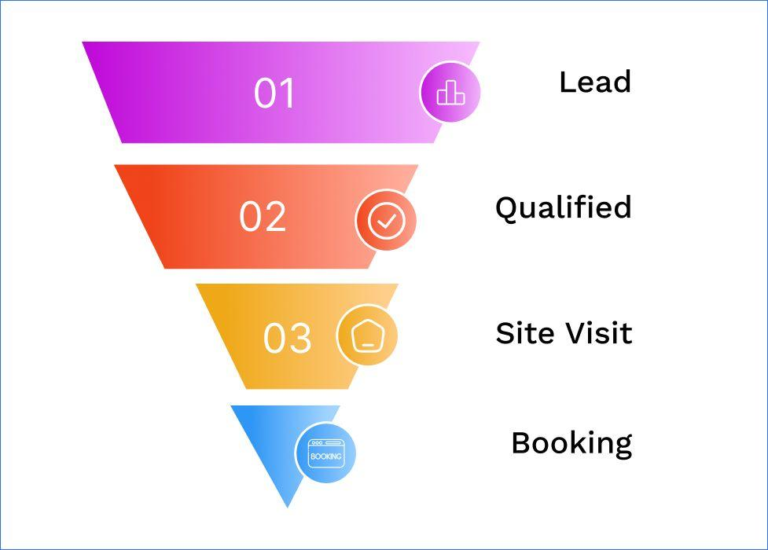
How to Manage Real Estate Leads Effectively and Convert More Site Visits
A property developer may receive hundreds of enquiries through Meta Ads, Google Ads, WhatsApp, websites, property portals and phone calls. But if these enquiries are not properly tracked, qualified and followed up, a large percentage of potential buyers can disappear.
Effective real estate lead management helps property businesses organize enquiries, identify serious buyers, follow up at the right time and ultimately increase property site visits and sales opportunities.
For real estate businesses, the goal should not simply be:
“How many leads did we generate?”
The better question is:
“How many genuine enquiries became site visits?”
What Is Real Estate Lead Management?
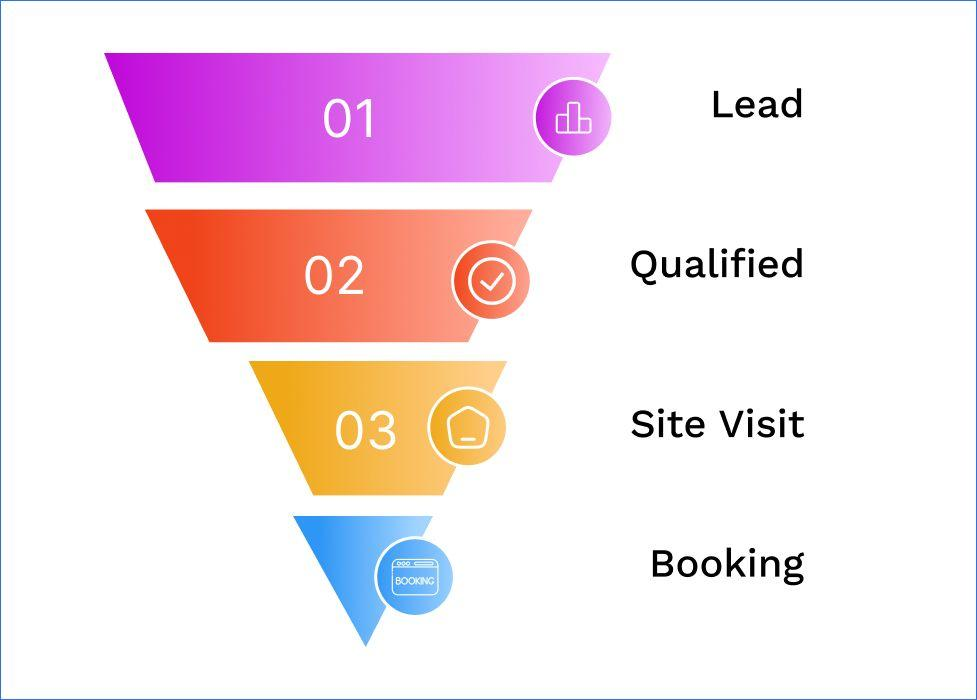
Real estate lead management is the process of collecting, organizing, qualifying, following up and converting property enquiries into potential customers.
A typical real estate lead journey looks like this:
Advertisement
↓
Property Enquiry
↓
Lead Capture
↓
Lead Qualification
↓
Follow-Up
↓
Site Visit
↓
Negotiation
↓
Booking / Sale
If there is a problem at any stage, the final conversion rate can suffer.
Why Real Estate Leads Are Difficult to Manage
Real estate leads are different from many other business enquiries.
A person who clicks a property advertisement may not be ready to purchase immediately.
They may be:
- Just exploring prices
- Comparing different projects
- Looking for a specific location
- Checking investment opportunities
- Waiting for loan approval
- Planning to purchase later
- Interested but not ready for a site visit
Therefore, every lead should not be treated in the same way.
A proper lead-management process helps identify where each prospect is in the buying journey.
1. Capture Leads From Every Marketing Channel
The first step is making sure enquiries don’t get lost.
Real estate businesses can receive leads from:
Meta Ads
Facebook and Instagram campaigns can generate enquiries through forms, WhatsApp and landing pages.
Google Ads
Google Search Ads can target people actively searching for properties, plots, villas and apartments.
Website
Property landing pages can capture enquiries through forms and WhatsApp.
Many property buyers prefer starting a conversation through WhatsApp.
Phone Calls
Call enquiries should also be recorded rather than remaining only in an individual salesperson’s phone.
Property Portals
Leads from property portals should be added to the same tracking process.
The objective is simple: one place to understand where every lead came from and what happened next.
2. Respond to New Leads Quickly
Speed matters in real estate lead management.
When someone enquires about a property, the sales team should ideally respond while the prospect still remembers the advertisement and property.
A simple first response could be:
“Hi, thanks for enquiring about our project. Are you looking for a plot for investment or for building your own home?”
This starts a conversation rather than immediately sending a large amount of promotional information.
3. Qualify the Real Estate Lead
Not every enquiry has the same potential.
A simple qualification process can classify leads into:
🔥 Hot Lead
The buyer is interested and potentially ready for a site visit.
🟡 Warm Lead
The buyer is interested but needs more information or time.
🔵 Cold Lead
The buyer is currently researching or has no immediate purchase intention.
You can also qualify prospects based on:
- Preferred location
- Budget
- Property type
- Plot size
- Purpose of purchase
- Investment or personal use
- Expected purchase timeline
- Preferred site-visit date
This allows sales teams to spend more time on leads with stronger buying intent.
4. Don’t Send the Same Message to Every Lead
One of the common mistakes in real estate sales is sending the same brochure to everyone.
Instead, customize communication according to the buyer.
For example:
Buyer looking for investment:
“This project may be suitable for long-term investment because of its location and surrounding development.”
Buyer looking for a home:
“Would you like us to show you the available plots suitable for constructing a house?”
Buyer interested in price:
“I can share the current price and available plot options. Would you like to schedule a site visit?”
Personalized conversations can make the enquiry feel more relevant.
5. Follow-Up Is More Important Than Lead Generation
Many real estate businesses focus heavily on generating new leads but don’t have a proper follow-up process.
A lead should not simply become:
Called → No response → Forgotten
Instead, create a follow-up schedule.
For example:
Day 0: Initial call/WhatsApp
Day 1: Follow-up message
Day 3: Share relevant property information
Day 7: Check purchase interest
Later: Continue periodic follow-up for interested prospects
The exact frequency should depend on the lead and the buyer’s response.
The key is to track the next follow-up instead of relying on memory.
6. Use WhatsApp as Part of the Lead Journey
WhatsApp can be particularly useful for property marketing because prospects often want to quickly receive:
- Project location
- Google Maps location
- Price details
- Layout
- Photos
- Drone video
- Amenities
- Nearby landmarks
- Site-visit information
Instead of sending everything at once, give the prospect the information relevant to their question.
A good property conversation can move from:
Advertisement → WhatsApp → Qualification → Site Visit
7. Use Video to Build Buyer Interest Before the Site Visit
Real estate is a visual product.
Instead of sending only static property images, businesses can use:
Drone Videos
Show the complete project from the air.
Cinematic Property Videos
Show roads, entrances, amenities, houses and surroundings.
360° Virtual Tours
Allow prospects to explore a property or development remotely.
Location Videos
Show nearby roads, schools, hospitals, transport and important landmarks.
Good visual content can help answer the buyer’s initial questions before they visit the property.
This is where content creation and lead management work together.
8. Track the Most Important Metric: Site Visits
A property campaign may generate:
500 leads
But suppose only:
35 people visit the site
Then the real business question becomes:
Why did 465 enquiries not become site visits?
This is why looking only at Cost Per Lead (CPL) can be misleading.
Real estate marketers should also monitor:
Cost per Qualified Lead
Lead-to-Site-Visit Rate
Cost per Site Visit
Site Visit-to-Booking Rate
Cost per Booking
These metrics provide a much better understanding of campaign performance.
Real Estate Lead Conversion Funnel
A simple funnel could look like:
10,000 Ad Impressions
↓
500 Enquiries
↓
150 Qualified Leads
↓
50 Site Visits
↓
10 Serious Negotiations
↓
3 Bookings
The exact numbers will vary by project, location, pricing and campaign quality.
But tracking the funnel allows developers to identify where improvements are needed.
9. Connect Advertising With Lead Management
Your marketing should not stop after generating an enquiry.
A better system connects:
Content
↓
Advertisement
↓
Lead Capture
↓
Lead Qualification
↓
Follow-Up
↓
Site Visit
↓
Sales
For example:
A drone video introduces a new plotted development.
↓
The video is used in a Meta campaign.
↓
An interested person clicks WhatsApp.
↓
The sales team qualifies the enquiry.
↓
The prospect receives the location and project details.
↓
A site visit is scheduled.
↓
The salesperson follows up after the visit.
This creates a complete real estate marketing-to-sales journey.
10. Retarget People Who Didn’t Convert
Not every person will enquire on their first interaction.
Someone may watch your property video, visit your website and leave without contacting you.
Retargeting can help bring these prospects back.
For example:
First interaction: Property video
↓
Second interaction: Project benefits
↓
Third interaction: Site-visit offer
↓
WhatsApp enquiry
The messaging can change according to the user’s stage in the buying journey.
11. Use a CRM or Lead Tracking System
As lead volume increases, spreadsheets and personal phone notes can become difficult to manage.
A CRM or structured lead-management system can help record:
- Lead name
- Phone number
- Source
- Project
- Budget
- Location preference
- Lead status
- Last contact
- Next follow-up
- Site-visit status
- Sales status
A simple pipeline could be:
New Lead → Contacted → Qualified → Interested → Site Visit Scheduled → Site Visit Completed → Negotiation → Booking
This makes it easier for a sales team to understand what is happening with every enquiry.
What Is the Best Way to Manage Real Estate Leads?
The best approach is to combine good lead generation with disciplined follow-up and clear tracking.
A practical system is:
Step 1
Create high-quality property content.
Step 2
Promote the content through Meta Ads and Google Ads.
Step 3
Capture enquiries through WhatsApp, forms or landing pages.
Step 4
Qualify the leads.
Step 5
Share the right property information.
Step 6
Schedule site visits.
Step 7
Follow up after the visit.
Step 8
Measure the complete funnel from advertisement to booking.
How MyDigitalBrand Can Help Real Estate Businesses
Real estate marketing works better when content creation and digital advertising are treated as one system.
MyDigitalBrand provides a combination of:
Professional Drone Shoots
↓
Real Estate Promotional Videos
↓
360° Virtual Tours
↓
AI Advertisement Creation
↓
Meta & Google Advertising
↓
Landing Pages
↓
Lead Generation
↓
Lead-Focused Marketing
The objective is not simply to make a property look attractive.
The objective is to present the property effectively, reach the right audience and generate enquiries that can move toward site visits.
Frequently Asked Questions
What is real estate lead management?
Real estate lead management is the process of capturing property enquiries, qualifying prospects, following up with them and converting suitable leads into site visits and sales opportunities.
How can real estate companies convert more leads into site visits?
Improve lead qualification, respond quickly, provide useful property information, use professional visual content and maintain a structured follow-up process.
Are Meta Ads useful for real estate lead generation?
Yes. Meta Ads can be used to reach audiences based on location, interests and campaign objectives, and can direct interested prospects toward forms, websites or WhatsApp conversations.
Is Google Ads useful for real estate?
Google Ads can be particularly useful for reaching people who are actively searching for property-related terms. Campaign performance depends heavily on location, keywords, landing pages, budget and lead handling.
Why are real estate leads not converting?
Common reasons include slow response, poor qualification, irrelevant leads, weak follow-up, insufficient property information, poor sales communication and a lack of tracking.
Should real estate businesses use drone videos?
Drone videos can provide an aerial perspective of a project, surrounding roads, layout and location. They can be particularly useful in property advertisements and promotional videos.
Conclusion
Generating real estate leads is only half the job.
The real opportunity lies in managing those leads properly and moving qualified prospects toward a site visit.
A successful real estate marketing system should connect:
Professional Content + Digital Advertising + Lead Capture + Follow-Up + Site Visits + Sales
When these elements work together, property businesses can make better use of every enquiry generated by their marketing campaigns.
MyDigitalBrand helps real estate businesses combine professional visual content, drone videos, 360° virtual tours, advertisements and digital marketing into a complete property promotion strategy.